About Turkmen Rugs
An independent guide, woven around curiosity
TurkmenRugs.com is a place to explore the patterns, craftsmanship, and heritage of Turkmen weaving. Clear explanations and documented examples offer a way to look more closely and find your own path into the subject.
Patterns. Craftsmanship. Heritage.
Who publishes the guide
Who’s behind
the guide?
TurkmenRugs.com is published by Worbble LLC, based in Idaho, and created and managed by Jon Waraas. Jon has been building websites since 2002; his background is in web development and running content websites.
His role is to shape the project, choose topics, organise the guides, and publish new material and corrections. The site uses AI-assisted research, drafting and design, with museum records and specialist references provided for readers to follow. Our Editorial Principles explain the approach to sources, uncertainty and imagery.
Jon also writes about web development and his other projects on his personal blog, waraas.com. Questions, corrections and source suggestions for this guide are welcome through our Contact page.
Why this guide exists
A place to begin.
A reason to look closer.
A field of repeating motifs, a woven edge, or a word in a collection record can each raise a question. This guide brings those starting points together through visual examples, plain language, and references you can follow.
Whether you are encountering the subject for the first time or developing an interest in collecting, the aim is to build understanding step by step. Looking at a rug also means considering the people, materials, skills, and uses behind it.
Three threads to follow.
Explore the guide in your own way.
Patterns & weaving traditions
Explore fields, borders, and motifs, then meet weaving traditions through the rug styles, Tekke, and Yomut guides.
Explore rug stylesPeople, materials & making
Follow the wool, colour, and woven structure, with history and heritage providing a wider setting for the textiles.
Discover the craftsmanshipLooking, collecting & care
Compare museum objects, study close-up details, and continue into the buying, care, and glossary pages as questions arise.
Open the Rug ExplorerOur approach
Look closely.
Follow the evidence.
- Start with observation.
- Describe the shape, colour, or structure that can be seen, and distinguish those observations from interpretations of age, origin, or meaning.
- Keep the record close.
- Connect examples to museum collection records and specialist references, so an explanation has a source readers can return to.
- Keep uncertainty visible.
- Retain qualifications in dates and attributions. A description such as “probably” or “attributed to” carries information worth preserving.
- Use words that help.
- Introduce unfamiliar terms, make comparisons carefully, and give readers a useful starting point for further study.
Photographs, illustrations & tools
Clear about what you’re looking at.
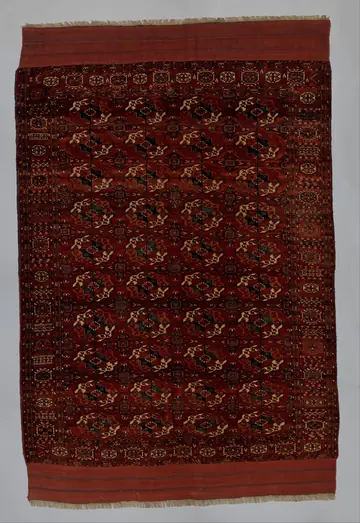
The guide includes real museum photographs with object details and credits. Labelled detail views and teaching diagrams help explain particular features. Decorative illustrations, including AI-generated imagery, are identified separately from photographs of documented textiles.
AI tools have also assisted with drafting and site design. Linked collection records and specialist references give readers a way to trace factual material, check its context, and continue beyond an introduction.
Explore sources & creditsA useful place to start
Pick up a thread.
Begin with an introduction, or let a documented textile lead the way.